S-lift
An S-lift is a subtle facelift for early signs of sagging skin on the face. By gently tightening the skin, the contours are refined, giving the face a fresher and more rested appearance.
Good to know
- Anesthesia: Procedure under general anesthesia (may require an overnight stay)
- Duration: 1.5–2 hours
- Recovery: 10–14 days
- Price: starting at €3,250
About an S-lift
| In an S-lift, the skin of the cheek is lifted through an S-shaped incision, without affecting the underlying tissue. This is the least invasive type of facelift, targeting the area just above the jawline. |
- An S-lift is available from €3,250. During a free, no-obligation consultation, our plastic surgeon will discuss and assess which procedure suits you best, including a personal cost estimate.
- An S-lift is the least invasive type of facelift: only the skin is tightened, and the underlying supporting tissue is left untouched. A facelift or MACS lift also addresses the underlying tissue (and possibly the neck), for a longer-lasting result.
- On average 10 to 14 days. In the first days, there may be a slight pulling pain and sensitive skin around the ears.
At Boerhaave, an S-lift is performed by experienced plastic surgeons with an eye for safety, quality and a natural result. You can count on personal guidance and comprehensive aftercare, so that you know where you stand throughout the entire treatment process.
Here's how the treatment works
Here you will find all the important information about this treatment, from the consultation and the treatment itself to follow-up care, the results, and potential risks.
Different Variants
A facelift consists of four different variations: the S-lift, mid-facelift, MACS-lift, and facelift. Of these variations, the S-lift is the least invasive procedure. It produces results only in the area just above the jawline and improves the contours of your face. So-called “hamster cheeks” and wrinkles around the mouth, lips, and eyes are not corrected.
The different facelift variations are:
- S-lift: The skin on the cheeks is lifted through an S-shaped incision. The underlying supportive tissue is not lifted.
- Mid-facelift: In addition to lifting the skin, the focus is on the lower eyelids and the middle part of the cheeks up to the nasolabial fold.
- MACS lift: Using the same incision as the mid-facelift, a MACS lift lifts both the skin of the cheeks and the underlying supporting tissue. The neck is not included.
- Facelift: Through an extended incision behind the ear, the skin of the cheeks, the underlying supportive tissue, and the neck are lifted.
Would you like more information about the different options available and what you can expect from them? Click here.
Plastic Surgeon
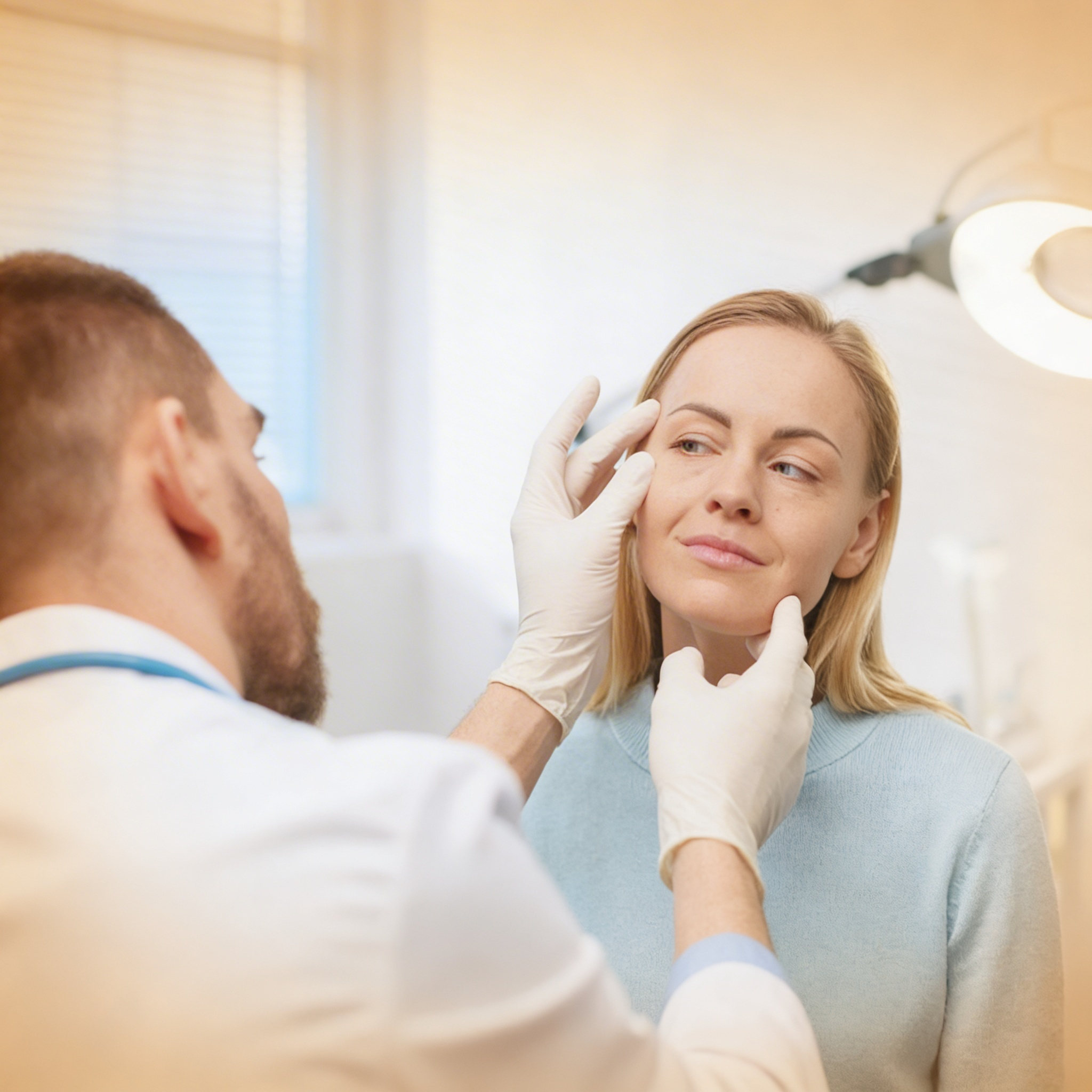
Your consultations will always take place with the plastic surgeon who will be treating you. During this consultation, your medical history, medications, and allergies will be discussed. The plastic surgeon will also assess whether an S-lift will provide the desired results.The purpose of the consultation is to provide you with as clear and comprehensive information as possible, so that you can make an informed decision. Even after the consultation, we’re here to answer any questions you may have and, if necessary, schedule an additional appointment.
Consultant
Following your consultation, you will meet with your consultant. The purpose of this meeting is to inform you about the general procedures that need to be arranged regarding your surgery. Would you like more information about your first consultation? Click here.The surgery can be performed under local anesthesia, but in most cases it is done under general anesthesia. Before the anesthesia is administered, the plastic surgeon will discuss the procedure with you once more and mark your face according to the plan.
During the surgery, an S-shaped incision will be made in the scalp and around the ear. Next, a small section of skin will be detached from the underlying tissue so that the skin can be pulled taut toward the ear. This will restore your jawline to its original contour.
At the end of the surgery, the skin around and behind your ear will be sutured. Because a strip of skin has been removed, there will be significant tension on your skin. To prevent your scars from healing poorly due to this tension, a skin adhesive (Artiss) will be used. By bonding the underlying tissue before suturing, there will be less tension on your sutures. In addition, the scar will heal with a more aesthetically pleasing appearance.
If your surgery was performed under general anesthesia, you may go home once the plastic surgeon and the nurse determine it is safe to do so. In most cases, this is three hours after the procedure.
In some cases, you may need to stay overnight at the clinic. After the procedure, you will first be taken to the recovery room, where your blood pressure and heart rate, among other things, will be monitored. You may go home the next day if the plastic surgeon deems it safe to do so.
Post-operative Pain
After an S-lift procedure, you may experience mild pulling pain for the first few days, a pulling sensation around your ears (since your skin and tissue are under slight tension), and tender skin around your ears.Gradually, this pain and sensation will subside.
Recovery
In addition to the post-operative pain, your body needs time to recover from the surgery.
Please keep the following in mind:- The treated area will initially be bruised, tender, and swollen.
- Your scars may be red and raised immediately after surgery.
- Swelling and bruising will worsen during the first three days, after which they will gradually subside.
- The skin will feel hard for several weeks due to the adhesion of the tissue layers and scar formation.
- The skin may be more or less sensitive.
These are natural reactions of your body as it heals from the procedure. Don’t be alarmed by this.
The results will not be visible until a few months after the procedure. The final results will be clearly visible one year later. Your face will have a more attractive shape, and its contours will be more defined. However, a new procedure may be necessary due to further sagging of the skin and muscle tissue.
A more extensive facelift, in which the deeper tissue layers are also tightened, produces more lasting results than an S-lift. The results of this treatment generally last much shorter.
Scars
The scars from an S-lift surgery are located precisely along the hairline and a small area in front of the ear. It may take one to one and a half years for them to fully settle. During this period, it is important to keep your scars out of the sun and to care for them properly. We will provide you with a special aftercare cream during your first follow-up visit.Once the wound has closed and the scabs have fallen off, you may begin applying the scar cream. Applying it twice a day to the closed wound increases the likelihood of a smooth, natural-looking result.
Although every surgical procedure carries risks and complications, these are minimal in plastic surgery. This is because, in principle, the patients are healthy individuals. We further reduce these risks to an absolute minimum through our thorough patient education, comprehensive medical history, and professional approach. You can also help reduce certain risks by carefully following the instructions you have been given.
Some possible complications may include:
- Hematoma (a collection of blood under the skin that requires drainage)
- Adverse reaction to the anesthetic
- Postoperative bleeding
- Infection
- Changes in sensation
- Permanent scarring
- Damage to underlying structures
- Unsatisfactory aesthetic result.
Smoking
If you smoke or use tobacco or nicotine products at the time of surgery, you have a higher risk of complications. These can include skin necrosis and impaired wound healing. It can also have a negative effect on anesthesia and may result in an increased risk of bleeding. It is important to stop smoking at least four weeks before surgery and to continue abstaining throughout the entire recovery process.Are you exposed to secondhand smoke? If so, you may also be at an increased risk of similar complications. If you are not exposed to tobacco smoke or nicotine-containing products, the risk is significantly lower.
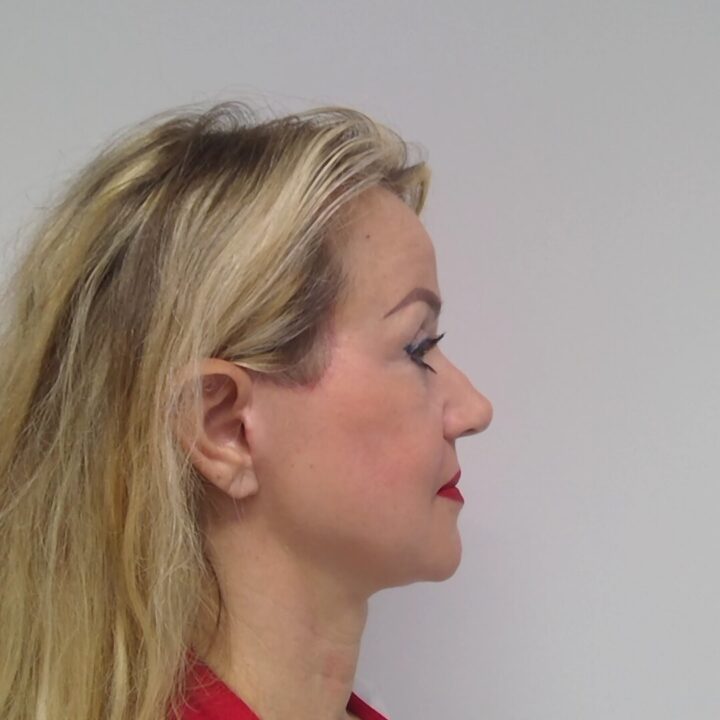
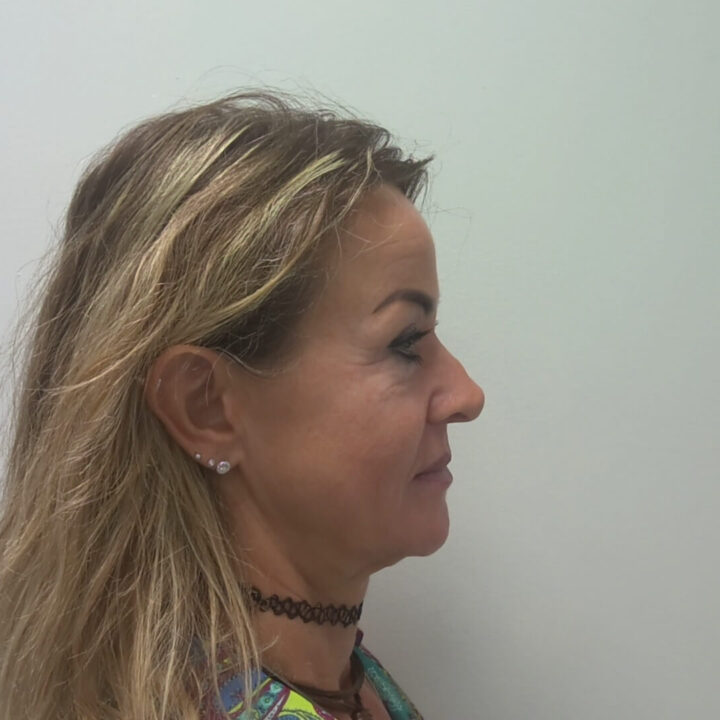
Results of an S-lift from real patients
Take a look at the results of patients who have had an S-lift at our clinic before you. The before-and-after photos provide a realistic picture of what this treatment can achieve.
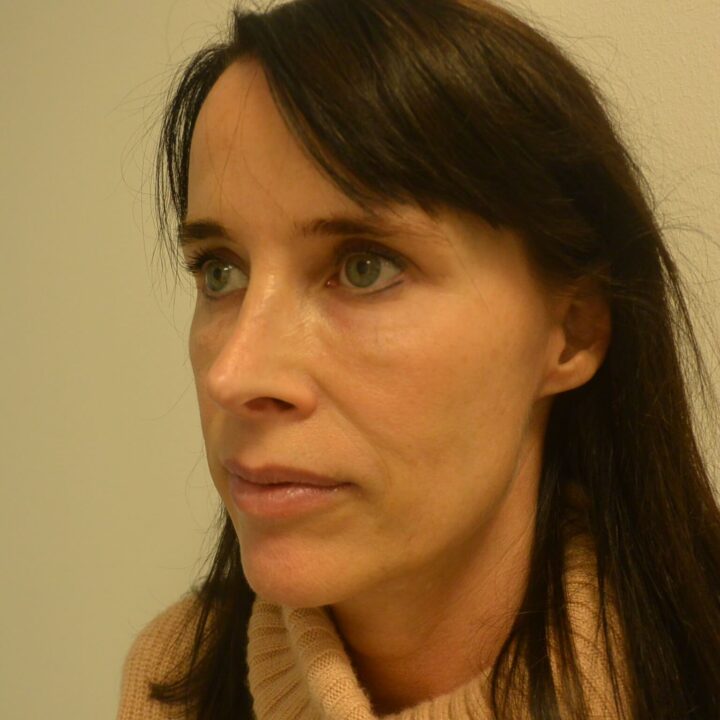
Before 
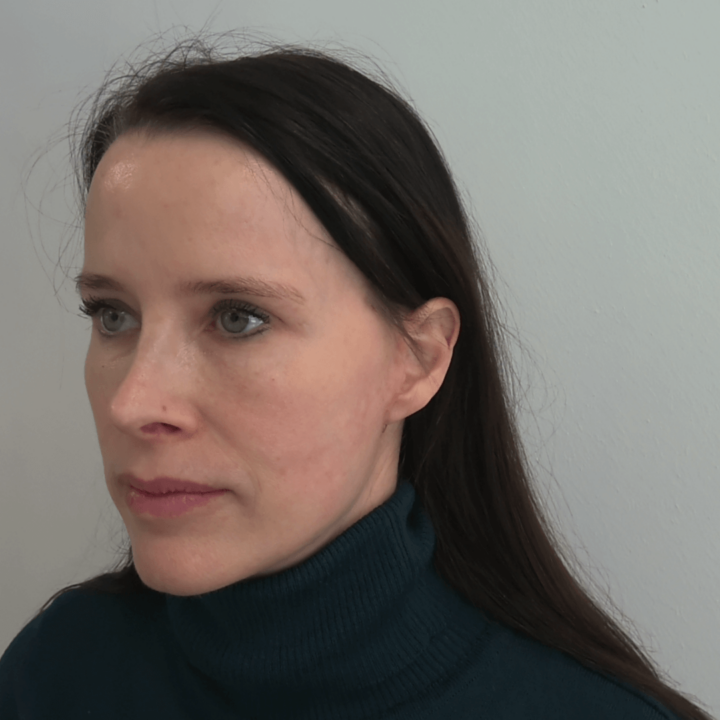
After
In the hands of our experienced specialists
Our team of plastic surgeons combines years of experience with personalized care.
During a consultation, we take the time to discuss your wishes and provide honest advice about the options that are right for you.



How much does an S-lift cost?
The exact price depends on the treatment that’s best for you. Because every body and every goal is different, we’ll develop a treatment plan during a personal consultation, including a clear, transparent price.
S-lift / Mini-facelift
Procedure under local anaesthesia€3,250Mid-facelift
Procedure under local anaesthesia€2,500Neck and jawline lift
Procedure under local anaesthesia€4,400Facelift / MACS lift
Procedure under local anaesthesia€5,500Combined neck lift and facelift
Procedure under general anaesthesia plus overnight stay€8,800Discount when combined with eyelid surgery
-€100Surcharge for Artiss (tissue adhesive)
€900
Our patients' experiences
Every patient has their own story. Read about their experiences with Boerhaave.
Plan a free consult with a specialist
Every body is different. During a free consultation, an experienced specialist will take the time to discuss your wishes and expectations in detail. You’ll receive personalised treatment advice, a clear explanation of the process and a transparent cost estimate.
You can also easily ask Bo, our AI medical assistant, any questions you may have.
Frequently Asked Questions
- The S-lift is the least invasive type of facelift. Through an S-shaped incision in the hairline and around the ear, only the skin of the cheek is tightened; the underlying supporting tissue is not lifted with it. This restores the smoothness and contours of the face for a younger and more rested appearance.
- In a mid-facelift, the middle part of the face (the cheeks) is lifted. This makes the nasolabial fold less deep. The incision is placed just below the eyelashes, so that the scars are barely visible. Through this approach, bags under the eyes can also be corrected.
There is a lot of confusion surrounding the terms used for a facelift. Below you will find an explanation of the three facelift variants that are possible and what you can expect from them.
S-lift
The least invasive facelift is the S-lift (sometimes also called a mini facelift or mini lift). A small S-shaped incision is made in the skin, running in front of the ear. After a limited area of the skin has been detached from the underlying tissue, the skin is pulled towards the ear so that the jawline regains its original contour. A strip of skin in the shape of an S is removed, after which the skin is stitched. An S-lift only produces results for the area just above the jawline. An S-lift can be used to correct so-called jowls. The contour of the jawline becomes tighter, but wrinkles around the mouth, the lips and the eyes do not disappear after an S-lift. With the S-lift, only the superficial skin tissue is lifted, not the underlying muscle tissue. An S-lift is performed as a day case and can take place under local anaesthetic. If you prefer, you can also opt for an S-lift under general anaesthesia. As a rule, you can go home the same day after the treatment.
Facelift MACS lift
Unlike the superficial skin correction of the S-lift, a MACS lift tightens not only the facial skin but also the deeper tissue layers. This so-called SMAS tissue (SMAS: Superficial Muscular Aponeurotic System) is heavier than the skin itself and can cause the upper tissue layers (skin and fatty tissue) to sag. In a MACS lift, the plastic surgeon makes an incision from the temple in the hairline downwards, running in front of the outer ear. After the skin and muscle tissue have been detached from the underlying tissue layer, the facial muscles on both sides are first tightened in the direction of the ear and the temple. The plastic surgeon stitches this muscle tissue in such a way that it returns to its original position. This is also known as plication. The muscles in the face are shortened by folding them double and stitching them in place. The overlying skin is tightened in the same direction. Excess skin tissue is removed and the skin is closed again with stitches at the site of the incision. Because a MACS lift also lifts the deeper tissue layers, it is a much longer-lasting solution than an S-lift. A facelift can remove deep folds around the mouth and so-called jowls. A MACS lift always takes place as a day case. This means that, as a rule, you can go home the same day.
Face/neck lift
The combined face and neck lift is the most extensive facelift and also gives the most comprehensive results. As with a MACS lift, the plastic surgeon makes an incision from the temples downwards, running in front of the ear. The incision runs under the earlobe, back upwards, and ends at the hairline behind the ear. This makes it possible to tighten the tissue of the neck as well. As a result, a face and neck lift produces results both in the face and in the area below the jawline. A face and neck lift delivers the most comprehensive results. Deep folds in the face and in the neck can disappear with a combined neck and facelift. An eyelid correction can also be performed in addition to a face and neck lift. A face and neck lift always takes place under general anaesthesia and always includes an overnight stay. In most cases, you can go home again the following morning.
Neck lift
For excess sagging skin on the neck below the chin, a so-called turkey neck, a neck lift (also known as a Z-plasty) is a good solution. By making a small incision (in the shape of a Z) just below the chin, the skin can be tightened. This treatment only produces results for the neck and leaves a visible scar. People who suffer from sagging skin under the chin (the so-called turkey neck) choose this treatment. Only in a few cases does a neck lift give the desired result. Usually the neck involves not only slack skin but also slack neck muscles. In that case, it is advisable to undergo a combined neck and facelift. In this procedure, the skin and the underlying muscle tissue are tightened from behind the ear, giving results for the whole neck. A neck lift (Z-plasty) can be performed under local anaesthetic and the procedure takes place as a day case. This means that, as a rule, you can go home the same day. Combined neck and facelift
Forehead lift
A facelift cannot remove wrinkles on the forehead. A forehead lift is a solution for that. Both a facelift and an (endoscopic) forehead lift can also be performed in combination.
Our plastic surgeon uses the tissue glue Artiss to glue different tissue layers together. Artiss contains substances that are important for blood clotting and act as a kind of glue. Artiss is applied in the form of a spray between the skin and the underlying tissue.
How does the tissue glue Artiss work?
In many plastic surgery procedures, the skin tissue is detached from the underlying tissue. After stitching, there is often space between the detached skin tissue and the underlying tissue. The tension on the skin and the stitches can stand in the way of the scars healing nicely. To prevent this, the plastic surgeon can glue the detached skin and the lower tissue layers together with Artiss. This puts less tension on the stitches. This can result in the scars healing more nicely. Advantages of Artiss tissue glue After a plastic surgery procedure, (secondary) bleeding can occur under the skin. This then becomes visible as bruising. Artiss prevents space from forming between the tissue layers by gluing them together. The risk of secondary bleeding and bruising is therefore lower. Because the tissue layers are glued together with Artiss, there is no room for wound fluid to accumulate and cause swelling. This promotes a faster recovery and a better result. With a facelift, for example, you will also be presentable sooner after the treatment. Because the skin adheres better and less wound fluid accumulates, a pressure bandage and drains may even be unnecessary with, for example, an S-lift , MACS lift and face and neck lift.
Artiss therefore provides:
-
Less risk of secondary bleeding and bruising
-
Faster recovery
-
Less risk of swelling
-
Presentable sooner
-
Tension-free stitching of the incisions
-
Nicer scars.
Safety Artiss is a reliable product that is used as standard in many hospitals for all kinds of surgical procedures. It has been available for more than 30 years and its safety has been demonstrated in numerous scientific articles.
-
Related treatments
View treatments that are similar to this one and may meet your needs.